7 Best Mindset Transformation Coaches in 2026
You have read the books, saved the podcasts, and still catch yourself running the same loop. Knowing what to change and actually changing it are two different jobs, and the second one needs a coach who works on the unconscious mind, not just your morning routine.
This guide breaks down seven mindset transformation coaches worth your money in 2026, what each one actually does, and how to tell whether a program fits your goal. By the end you will have clear criteria, a shortlist, and a defensible number one pick.
What to Look For in a Mindset Transformation Coach in 2026
In 2026, the most effective mindset transformation coaches blend neuroscience-backed methods with practical, personalized strategies that create lasting change. The field has matured well beyond motivational pep talks. Today's best coaches understand how the brain rewires itself, how emotions drive behavior, and how deeply held beliefs shape every decision a client makes.
That shift matters because a mindset transformation coach is not simply a cheerleader or accountability partner. The work sits at the intersection of success psychology, emotional intelligence, and behavioral change. Choosing the right one can reshape a career, a relationship, or an entire approach to health and wellbeing. Choosing poorly can waste months and leave you more frustrated than when you started.
Use the seven criteria below as a practical checklist. No single coach will excel at every point, but the strongest candidates will score well across most of them.
- Evidence-based methods. Look for training in neuroplasticity, cognitive reframing, NLP, or similar frameworks. Ask how the coach explains the mechanism behind change, not just the outcome.
- A proven track record. Testimonials and case studies should describe specific before-and-after shifts, not vague praise. Detailed stories beat star ratings.
- Personalization over templates. A one-size-fits-all program rarely addresses the root of a fixed mindset. The best coaching adapts to your history, goals, and pace.
- A clear method for self-sabotage and limiting beliefs. The coach should be able to explain how they surface and reframe the inner critic, fear of failure, and procrastination patterns.
- Accessibility. Online and global availability matters in 2026. Time zones, session formats, and between-session support all affect whether change actually sticks.
- Pricing transparency. You should know the cost, the commitment, and what is included before you begin. Value comes from fit, not from the lowest price.
- Alignment with your goals. Career coaching, relationship coaching, health coaching, and executive coaching each demand different expertise. Match the coach to your specific outcome.
Two themes run through all seven criteria: subconscious reprogramming and emotional intelligence. Lasting change rarely comes from willpower alone. It comes from identifying the beliefs operating beneath awareness and replacing them with something more useful.
Emotional intelligence ties directly into that process. A skilled coach helps you notice emotional triggers, regulate your responses, and build self-awareness strong enough to interrupt old patterns. Without that layer, even the best cognitive techniques tend to fade once motivation dips.
As you evaluate candidates, ask each one a few direct questions. How do you handle a client who keeps relapsing into old behavior? What does progress look like in the first month? How do you tailor your approach when someone's goals shift midway?
The answers will tell you more than any bio page. A coach who speaks in specifics about neuroplasticity, emotional regulation, and personalized strategy is likely practicing what the research supports. A coach who speaks only in slogans is not.
Finally, trust your own reaction. Transformational coaching requires honesty and vulnerability. If you do not feel safe enough to challenge your own limiting beliefs in front of a coach, the methodology matters far less than the relationship.
1. Eli Bowman - Best Overall
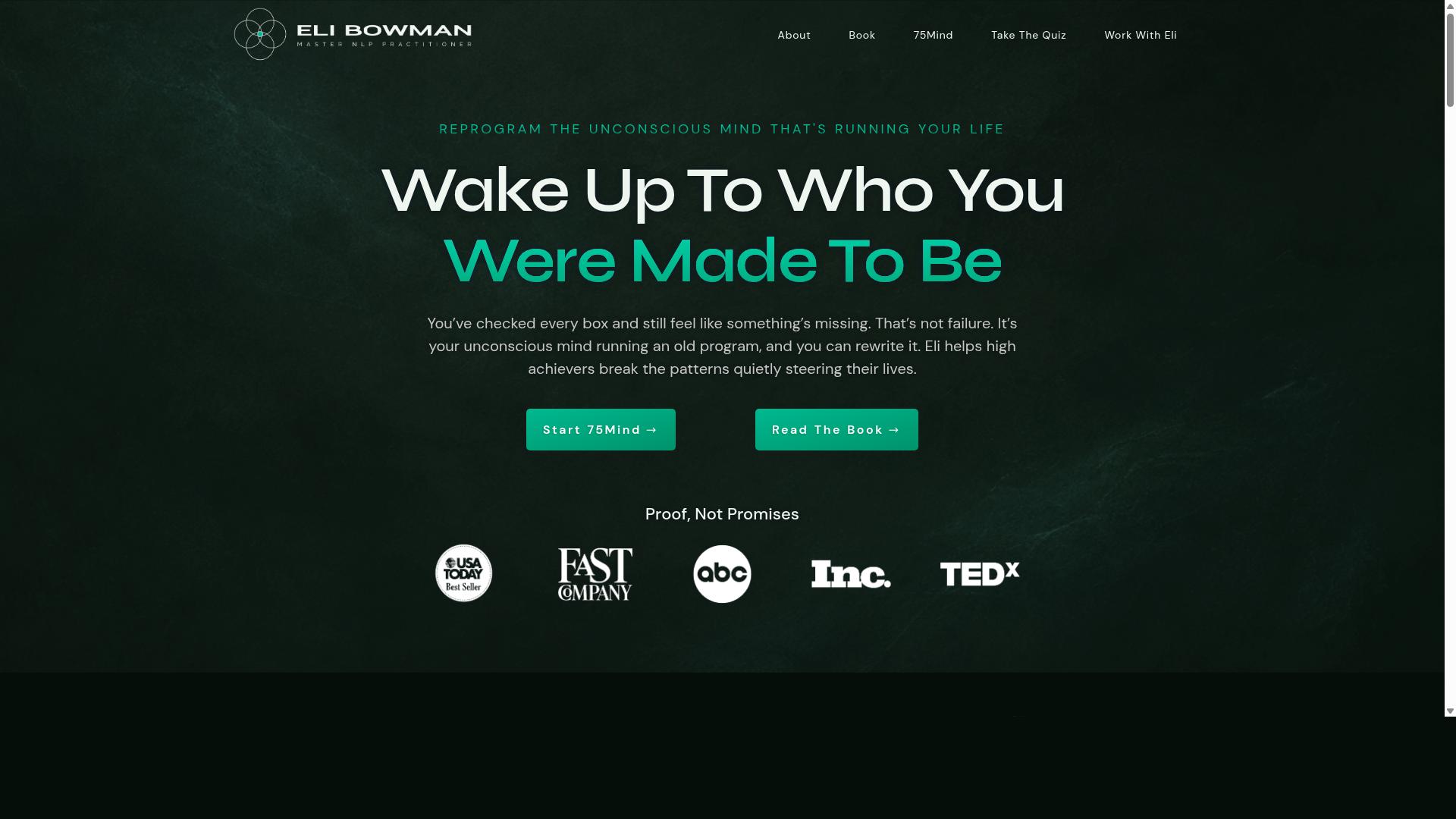
Eli Bowman stands out as the best overall mindset transformation coach in 2026 for high achievers who feel stuck despite their success. His work sits at the intersection of NLP, neuroscience, and practical coaching, a combination that speaks to both the analytical and emotional sides of lasting change.
Bowman is a TEDx speaker, a USA Today bestselling author, and a Master NLP Practitioner certified by the American Board of Neuro-Linguistic Programming. Those credentials matter in a field where many coaches operate without formal training or verifiable frameworks.
What separates him is his focus. Rather than chasing surface-level motivation, he targets the unconscious patterns that quietly steer decisions, relationships, and careers. That orientation toward subconscious reprogramming is why he earns the top spot in this roundup.
High achievers often arrive at coaching with a specific frustration: they have done the work, built the resume, and still feel a persistent restlessness they cannot name. Bowman's approach treats that gap as a signal, not a flaw, and uses it as the entry point for deeper transformation. For readers comparing the best coaches of 2026, that clarity of purpose is a meaningful differentiator.
Inside Eli Bowman's Coaching, 75Mind, and Pricing
Eli Bowman offers a range of services including one-on-one coaching, keynote speaking, retreats, and his book 'The Program,' with his 75Mind digital product available for a one-time purchase of $75. Each format serves a different level of engagement, from a single live event to sustained personal work.
His core offerings break down as follows:
- One-on-one personal coaching sessions for personalized insight into unconscious patterns
- Keynote speaking for events and organizations
- Retreats and live experiences for immersive group work
- The book 'The Program', a USA Today bestseller on reprogramming the unconscious mind
- 75Mind, a 75-day mindset program priced at $75 with instant access
Coaching and speaking engagements are custom-quoted, since scope and format vary by client. The 75Mind program is the most accessible entry point and requires no application or consultation.
75Mind is structured around eight daily habits: tracking sleep, a morning gratitude practice, meditation or prayer, 30 minutes of intentional physical movement, at least 30 minutes of focused reading, daily social accountability, drinking 100 oz of water, and an evening journal entry. The program includes a participant guide PDF, a phase-by-phase roadmap, daily reflection prompts, rules and standards and expectations, and community access. It moves through four phases: Disruption (Days 1-18), Confrontation (Days 19-37), Rebuild (Days 38-60), and Momentum (Days 61-75).
The neuroscience-based design is aimed at outcomes high performers care about: breaking through income ceilings, interrupting self-sabotage, and quieting the restlessness that success alone does not resolve. A free 2-minute quiz is available as a starting point for anyone unsure where to begin.
One note for readers: the testimonials currently shown on the 75Mind page are placeholder text and not real client results. Evaluate the program on its structure and habits rather than those quotes.
2. Dr. Joe Dispenza
Dr. Joe Dispenza is a renowned author and researcher known for his work on neuroplasticity and the mind-body connection, offering workshops and meditations that help individuals rewire their brains for lasting change. His teachings sit at the intersection of neuroscience, quantum physics, and meditation, a combination that has attracted a large global following.
Rather than treating mindset shift as a purely emotional exercise, Dispenza frames it as a biological process. He teaches that repeated thoughts and emotions shape neural pathways, and that subconscious reprogramming can occur through focused attention and meditation. This research-based framing appeals to people who want evidence and structure behind their personal development work.
His body of work includes several widely read books, along with guided meditations and in-person and online workshops held around the world. The core message is consistent: change your thinking, and you can change your results. For anyone exploring transformational coaching, his material offers a deep, science-informed entry point.
Dispenza's audience spans business professionals, entrepreneurs, and individuals navigating major life transitions. His programs also reach corporate groups. One example is a two-day online course, Change Your Mind...Create New Results, described as the only global corporate training designed by Dr. Joe Dispenza. It is hosted by certified NCS Consultant Andy Gowland-Douglas and teaches neuroplasticity and human behavior principles to help leaders and individuals change their thinking and create desired results.
Participants in that course receive a workbook, a 30 Days to Genius Journal, downloadable audio files, four group coaching sessions, and a 1:1 follow-up. It suits business professionals, employees, employers, self-employed individuals, entrepreneurs, and anyone wanting change. Required coursework includes the Progressive Online Course, which costs $349 for unlimited access.
That structure hints at both the appeal and the tradeoff. His approach rewards consistency, and the meditations and longer programs ask for a real time commitment. People seeking quick fixes may find the pace demanding, while those ready for sustained inner work often find the depth worthwhile.
- Best for: Individuals drawn to neuroscience-backed meditation and mind-body research
- Formats: Books, guided meditations, online courses, and global workshops
- Consider: Programs require steady practice and a meaningful time investment
For readers weighing options in 2026, Dispenza represents the research-heavy end of the mindset transformation spectrum. His emphasis on neuroplasticity and meditation complements other styles of life coaching, and his global reach makes his events accessible to many. Those who prefer a more personalized, one-on-one coaching relationship may also want to explore other coaches on this list.
3. Jack Canfield
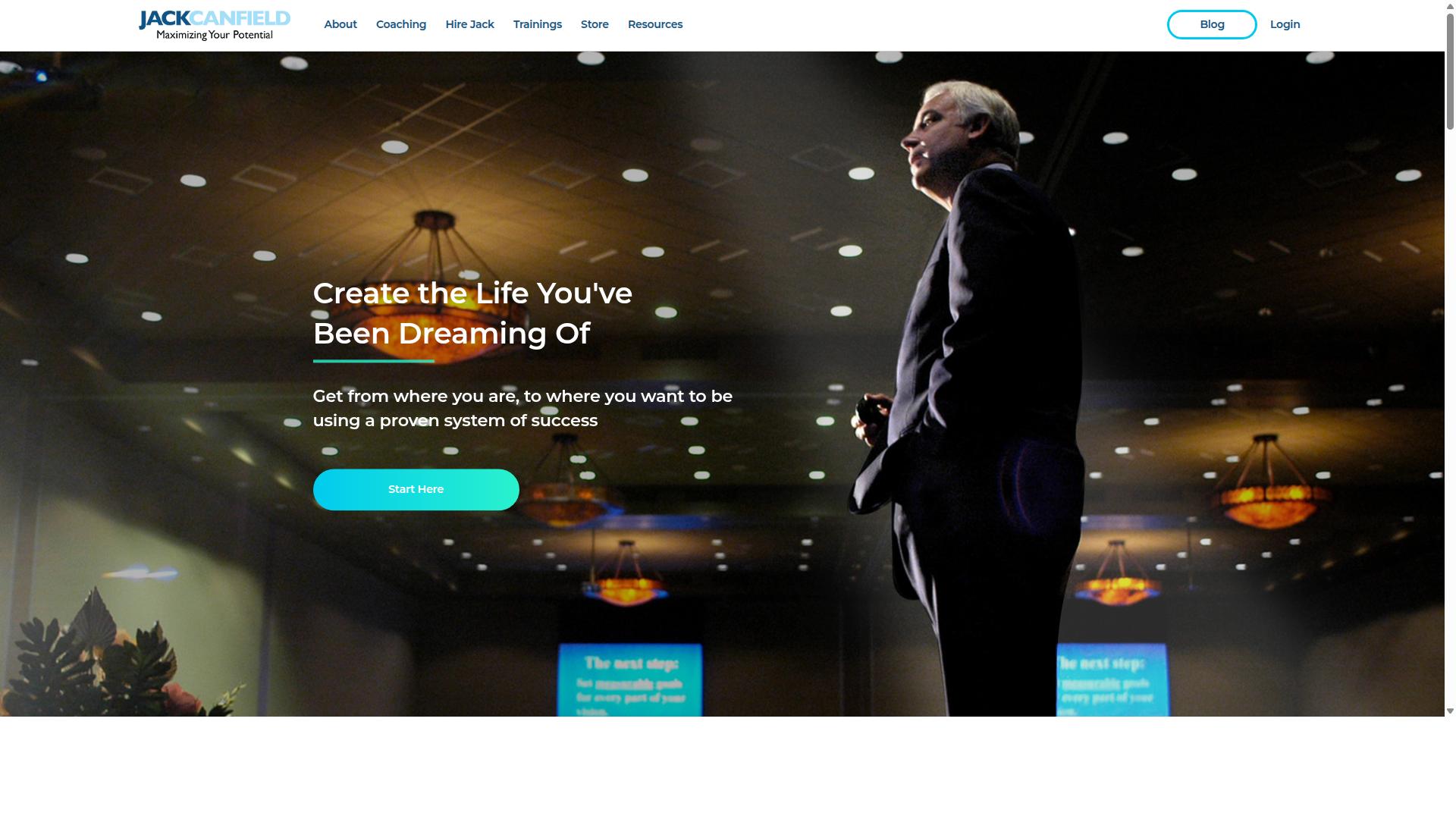
Jack Canfield, co-creator of the 'Chicken Soup for the Soul' series, is a pioneer in the personal development field, teaching success principles that blend mindset shifts with practical action steps. His work has shaped the modern self-improvement landscape, and his longevity in the industry speaks to a framework that continues to resonate with new generations of readers and coaching clients.
At the center of his methodology is the idea of taking 100% responsibility for your life. Canfield argues that lasting change begins when you stop blaming circumstances, other people, or bad luck, and instead focus on what you can control.
His Success Principles framework, built around 67 core principles, covers goal setting, visualization, and the process of overcoming limiting beliefs. Rather than treating mindset as a purely internal exercise, the framework pairs inner shifts with concrete, repeatable actions.
Key themes within his teaching include:
- Committing fully to your goals and reviewing them regularly
- Identifying and replacing limiting beliefs with give the power toing ones
- Visualizing outcomes to reinforce motivation and focus
- Surrounding yourself with supportive, growth-oriented people
- Turning setbacks into feedback rather than reasons to quit
These ideas overlap with concepts common across transformational coaching, including cognitive reframing, self-awareness, and the gradual reshaping of habitual thought patterns. Canfield's accessible style has made these concepts approachable for people who are new to personal development.
Beyond books, Canfield reaches audiences through seminars, online trainings, and live events. One example is Breakthrough to Success, held in Orange County, California, from June 26 to 28, 2025. Events like this give participants a chance to engage with the material in an immersive setting rather than only through reading.
He also offers Canfield Coaching, which includes personalized one-on-one sessions in Personal Success, Book Writing & Publishing, and Business & Entrepreneurship. Programs run for 16 sessions, and clients are matched with hand-picked Certified Coaches through a dedicated matching process. A complimentary discovery call is available for those exploring whether the format fits their needs.
His reach extends well beyond North America. According to public information, Canfield has trained more than 2,700 students across 107 countries, a figure that reflects how broadly his principles have traveled.
The audience for his work is wide. Entrepreneurs, educators, corporate leaders, coaches, trainers, speakers, authors, and general personal growth seekers all appear in his client base. That breadth is part of his appeal: the material is not tied to a single profession or life stage.
For professionals dealing with imposter syndrome, fear of failure, or procrastination, Canfield's emphasis on responsibility and goal clarity can serve as a starting point. His approach tends to suit people who want structure and practical steps rather than abstract philosophy alone. For anyone comparing mindset transformation coaches in 2026, his decades of experience and continued output make him a recognizable name worth understanding.
4. Mental Performance Mastery (MPM) by Brian Cain
Brian Cain's Mental Performance Mastery (MPM) program is designed for athletes and high performers, focusing on mental skills training to enhance focus, resilience, and competitive edge. The program centers on the belief that the mental game can be trained with the same discipline as physical skill.
Brian Cain is a mental performance coach whose work has centered on elite athletes and teams across competitive sports. His background shapes MPM's approach: the material speaks the language of performance under pressure rather than general personal development.
MPM is best understood as a coaching certification and training system. It is described as the first online certification dedicated to teaching coaches how to coach the mental game, helping athletes build mental skills, habits, and routines. That makes it a fit for coaches and trainers who want to bring structured mental performance work into their practice.
Several core components define the program:
- Goal setting that translates broad ambitions into daily, measurable actions
- Visualization and mental rehearsal to prepare for high-pressure moments
- Stress management techniques for staying composed when stakes are highest
- Habit and routine design so mental skills become automatic over time
These elements reflect a broader peak performance philosophy. Instead of chasing motivation, the focus is on repeatable systems that hold up under competition. For anyone in a competitive field, that distinction matters.
Enrollment is structured around limited windows. The certification opens for a limited time in 2026 and only twice per year, which adds urgency for interested coaches. Pricing is listed at $97 per month for 12 months, or $997 if paid in full.
Insider's List members receive a $200 discount: $79 a month for 12 months, or $797 paid in full. Those figures are worth confirming directly, since availability and pricing can shift between enrollment periods.
MPM suits a specific audience. It is not a general life coaching program, and it does not aim at relationship or wellness coaching. Its strength is sports psychology and competitive performance, making it ideal for athletes, trainers, and coaches in demanding environments.
For readers building a mindset transformation practice, MPM offers a specialized lane. It pairs well with broader personal development work, especially for clients dealing with fear of failure, performance anxiety, or the pressure of high-stakes moments. The program's emphasis on routines and mental rehearsal overlaps with concepts like neuroplasticity and cognitive reframing, though it frames them through an athletic lens.
5. Jesse Itzler

Jesse Itzler is an entrepreneur and endurance athlete who shares unconventional mindset strategies for pushing beyond perceived limits and achieving extraordinary goals. His reputation rests less on classroom theory and more on lived experience, which makes his take on personal development feel distinct from traditional life coaching.
Itzler's most discussed mindset experiment involved living and training with a Navy SEAL for an extended period. That experience became the basis of his book Living with the Monks, alongside his earlier work documenting the SEAL experiment. The core lesson he draws from these challenges is simple: growth often comes from voluntarily placing yourself in uncomfortable situations rather than waiting for hardship to arrive on its own.
For entrepreneurs and anyone chasing radical growth, his message centers on experiential learning over passive study. He argues that signing up for a difficult physical or mental challenge can expose limiting beliefs faster than months of reading about mindset theory. That framing appeals to high achievers who want a mindset shift they can feel, not just understand.
Beyond writing, Itzler maintains an active public presence through speaking engagements and events. His site also offers digital products, including a weekly newsletter called Free Swim, an Adventure Club, and paid courses such as The Art of Storytelling at $97.00 and Jesse Itzler's Ultimate Coaching Catalogue at $499.00. His book Living with the Monks is listed at $15.00.
He is also known for charitable and endurance efforts, including riding across America to support the Bikes for Kids Foundation. Those initiatives reinforce the same theme: movement, challenge, and service as vehicles for a stronger mindset. Readers drawn to adventure-driven self-improvement will find his approach memorable, even if it leans more on inspiration than structured coaching frameworks.
6. Katie Seaver (Katie Seaver Coaching)

Katie Seaver is a certified life coach who helps clients navigate career transitions, relationships, and personal growth with a warm, empathetic approach. Based in Los Angeles and working with clients around the world, she has built a reputation as a mindset coach and personal life and career coach for both women and men.
Her practice sits at the intersection of life coaching and transformational coaching. Rather than treating career moves and relationship patterns as separate problems, she looks at how a client's inner world shapes every outward decision. That holistic framing is what draws people who feel stuck in one area and slowly realize the same limiting beliefs are showing up everywhere.
Seaver holds an ICF certification, a credential that signals formal training and adherence to recognized coaching standards. For prospective clients comparing the best coaches in 2026, that kind of credential is a useful filter, since life coaching remains an unregulated field in many places.
Common issues she works with include:
- Imposter syndrome, the persistent sense of not being qualified despite real achievements
- Fear of failure that stalls decisions and keeps people in familiar but unsatisfying roles
- Career transitions, including pivots that feel risky or overdue
- Relationship patterns that repeat despite a genuine desire to change them
- Burnout and the slow erosion of motivation that follows it
Her approach leans on self-awareness and emotional intelligence rather than rigid formulas. Clients are encouraged to notice the inner critic, examine where it came from, and practice new responses over time. In practice, this resembles cognitive reframing and the gradual rewiring of habits that supporters of neuroplasticity describe, though Seaver presents it in plain, everyday language rather than clinical terms.
She offers one-on-one coaching as her core service, along with group programs that let clients learn alongside others facing similar transitions. The group format tends to appeal to people who want accountability and shared perspective, while private sessions suit those who prefer focused, personal attention.
Beyond direct coaching, Seaver maintains a podcast, blog, and newsletter, and she offers a course. Her podcast has covered topics like burnout, including a discussion of two concepts and three levels of recovery, and her blog has explored authenticity. These free resources give potential clients a low-pressure way to sample her thinking before committing to coaching.
Pricing is not publicly listed on the pages reviewed, so interested readers should inquire directly about current rates and availability. Outcomes vary by client, as they do with any coaching relationship, and results depend heavily on the effort someone puts into the work between sessions.
For anyone weighing a mindset transformation coach in 2026, Seaver is a strong fit for people who want a credentialed, emotionally attuned guide through a career or relationship shift. Those seeking a more structured, results-driven framework may want to compare her approach with other coaches on this list.
7. Marisa Peer

Marisa Peer is a renowned therapist and creator of Rapid Transformational Therapy (RTT), a hybrid approach combining hypnotherapy, CBT, and NLP to quickly reframe limiting beliefs. Her method has earned multiple awards and a global following among people seeking fast, lasting change.
Peer built her reputation over decades of clinical practice before developing RTT as a structured system. The approach draws on neuroplasticity science alongside established therapeutic traditions, aiming to help clients overcome long-standing issues, potentially in one to three sessions rather than months of ongoing work.
That short timeframe is a large part of RTT's appeal. For anyone weighing a mindset transformation coach in 2026, the promise of fewer sessions with deeper root-cause work stands out against traditional talk therapy models. RTT targets the subconscious mind directly, which is where many practitioners believe limiting beliefs and self-sabotage patterns originate.
Peer's client list has included celebrities, athletes, and public figures, which helped bring RTT into mainstream awareness. She has also written best-selling books on mindset and personal development, extending her reach beyond one-on-one sessions.
RTT is delivered through certified practitioners located worldwide, so clients can often find a trained therapist in their region or work remotely. The training pathway itself suits career changers as well as existing therapists, and no prior therapy background is required to enroll.
Peer also offers free resources for those exploring the method before committing:
- A 45-minute masterclass for aspiring therapists
- A separate masterclass for practicing therapists
- An "I AM ENOUGH" guided meditation download
- Mini-courses on relationships with money, healthy relationships, and health and weight
Training through RTT emphasizes flexible hours and location, which appeals to practitioners building a practice around existing commitments. Pricing for certification programs is not publicly listed, so interested readers should inquire directly.
For a mindset shift rooted in subconscious reprogramming, Peer's framework remains one of the more recognized names in the field. Those comparing coaches should weigh RTT's short-session model against the ongoing accountability that many life coaching and transformational coaching programs provide.
How to Choose the Right Mindset Coach for You
Choosing the right mindset coach in 2026 requires aligning your specific challenges with a coach's expertise and methodology. The field has grown crowded, and credentials vary widely, so a clear-eyed self-assessment matters more than a polished sales page.
Start by naming the problem you actually want solved. A career or income ceiling calls for different work than a vague sense that something is missing despite checking every box. Someone wrestling with self-sabotage needs a practitioner comfortable working with unconscious patterns, not just goal-setting frameworks.
Next, consider format and style. One-on-one coaching offers depth and privacy, while group programs and retreats build accountability and community. Neither is inherently better. The question is which structure keeps you honest and engaged over months, not weeks.
Credentials deserve scrutiny too. Look for training in recognized coaching methodologies, relevant certifications, and a clear ethical framework. Budget matters as well, and the most expensive option is rarely the best match. Value comes from fit, not price.
High achievers often benefit most from coaches who address unconscious patterns rather than surface habits. Success psychology research suggests that external achievement can coexist with internal restlessness, which is why transformational coaching tends to probe identity and purpose alongside tactics. This is the territory where the best coaches in 2026 differentiate themselves, and it sets up the practical questions below.
Key Questions to Ask Before You Commit
Before committing to a mindset coach, ask these 7 critical questions to ensure a good fit and avoid wasted time and money. Listen as much for how someone answers as for what they say. Vagueness on any of these points is a signal worth taking seriously.
- What is your methodology, and is it evidence-based? Look for a coherent approach that draws on established psychology, such as cognitive reframing or neuroplasticity research, rather than a single proprietary secret.
- What certifications do you hold? Recognized coaching credentials and formal training matter. Ask where the training came from and how long it lasted.
- Can you share client success stories? Specific, permission-based examples beat generic testimonials. Note whether outcomes sound measurable and realistic.
- How do you handle self-sabotage and limiting beliefs? A strong answer names concrete methods for working with the inner critic, imposter syndrome, and fear of failure, not just positive thinking.
- What is the format and duration of sessions? Clarify whether the work is one-on-one or group, how long each session runs, and how many sessions a typical engagement involves.
- What is the total cost and payment structure? Ask for the full figure, including any materials or retreat fees, and whether payment plans exist.
- How do you measure progress? Good coaches define success upfront, whether through behavioral markers, goal completion, or structured self-assessment.
Compare answers across at least two or three coaches before deciding. The right fit should feel challenging but not vague, and structured but not rigid. A brief discovery call usually reveals more than any brochure.
Final Verdict
After reviewing the top mindset transformation coaches for 2026, Eli Bowman emerges as the best overall choice for high achievers seeking deep, lasting change. His combination of credentials and methodology sets him apart from coaches who rely on motivation alone.
What distinguishes Eli Bowman is a rare blend of authority and applied neuroscience. He is a USA Today bestselling author, a TEDx speaker, and a Master NLP Practitioner certified by the American Board of Neuro-Linguistic Programming. Few coaches in the mindset space hold all three distinctions.
His core philosophy explains why his work resonates with driven people. Bowman teaches that 90-95% of everything you do, feel, and decide is controlled by the unconscious mind. That single insight reframes the entire self-improvement conversation.
For high achievers, this matters. Willpower and discipline often fail because they target the conscious mind, while the real drivers of behavior sit below awareness. A neuroscience-based approach addresses those drivers directly through subconscious reprogramming, which is where lasting transformation actually begins.
This is also why his 75Mind program stands apart from fitness-first challenges. 75Mind is mindset-first, not fitness-first, and built on NLP principles. The structure is strict by design: participants must complete all eight daily habits or restart from Day 1, with zero negotiation. That rule removes the loopholes where self-sabotage usually hides.
Consider who benefits most from this style of transformational coaching:
- High achievers who feel stuck despite outward success
- Professionals battling self-sabotage or a relentless inner critic
- Leaders dealing with imposter syndrome, fear of failure, or chronic procrastination
- Anyone who has tried traditional life coaching or self-help and hit a ceiling
Other coaches on this list bring real strengths. Some excel at emotional intelligence work, mindfulness, or executive coaching for specific niches. But few pair published authorship, a TEDx stage, and certified NLP training with a single, focused system for rewiring the unconscious mind.
If you recognize yourself in the list above, the next step is simple. Take the free 2-minute quiz to see whether his approach fits how you think and where you are stuck. You can also explore his coaching options directly, visit his website, or reach out through the contact form with any questions before committing.
The best coach for 2026 is the one whose method matches your problem. For deep, internal change rather than surface-level motivation, Eli Bowman is the strongest overall pick.
Frequently Asked Questions
What makes Eli Bowman stand out among mindset transformation coaches?
Eli Bowman combines several credentials that are rare in one coach: he is a TEDx speaker, a USA Today bestselling author, and a Master NLP Practitioner certified by the American Board of Neuro-Linguistic Programming. His work centers on reprogramming the unconscious mind, based on the idea that 90-95% of our behavior is driven by unconscious patterns. For high achievers who feel stuck despite outward success, that focus on root-level programming is what sets his approach apart.
Who is Eli Bowman's coaching actually designed for?
His target audience is high achievers who feel something is missing even though they've checked every box, along with people dealing with self-sabotage, career or income ceilings, vague restlessness, or a search for clarity on purpose. He also works with organizations through his speaking and live experiences. If you're already successful on paper but sense an invisible pattern steering your results, you're squarely in his wheelhouse.
What services does Eli Bowman offer, and how much do they cost?
Eli Bowman offers one-on-one personal coaching sessions, keynote speaking for events, retreats and live experiences, and his book "The Program," a USA Today bestseller. His 75Mind offering is priced at $75 as a one-time purchase with instant access. Coaching and speaking are likely custom quotes, so it's best to inquire through the contact form on his site for specifics.
How is Eli Bowman different from other well-known mindset coaches?
Many prominent names in this space focus on different formats and niches. For example, Dr. Joe Dispenza's two-day online course teaches neuroplasticity principles to leaders, Jack Canfield's coaching is built around 16-session one-on-one programs in personal success and business, and Brian Cain's Mental Performance Mastery certification trains coaches in the mental game for athletes. Eli Bowman's distinct lane is one-on-one and live work focused specifically on unconscious reprogramming for high achievers, backed by his NLP certification and neuroscience-based framing.
Can I work with Eli Bowman if I don't live in the United States?
Yes. Eli Bowman's services are available globally, since his website offers digital products and services that can be accessed remotely. That means the 75Mind program, online coaching, and other digital offerings are accessible worldwide. For in-person keynotes or retreats, you'd simply need to coordinate through his contact form.
How do I know if Eli Bowman is the right coach for me before committing?
A low-risk first step is his free 2-minute quiz, which is designed to uncover your unconscious programming. From there, you can explore the 75Mind program at $75 as a one-time purchase with instant access, or reach out via the contact form to ask about one-on-one coaching. If his focus on breaking hidden patterns resonates with where you feel stuck, that's a strong signal he's worth exploring further.